
Growing up, the aroma of Slow Cooker Korean Beef Noodles wafting through the house was a sure sign that something special was on the way. My grandmother would often prepare this dish on chilly evenings, filling the air with the comforting scent of spices and savory beef. The slow cooking process always felt like magic, transforming simple ingredients into a warm embrace of flavor and texture.

This dish is more than just a meal; it's a heartwarming experience that brings families together. The tenderness of the beef, soaked in a rich sauce and served over chewy udon noodles, makes it a comforting favorite that's perfect for busy weeknights or cozy gatherings. It's a recipe that not only nourishes the body but also feeds the soul.
What Is Slow Cooker Korean Beef Noodles?
Slow Cooker Korean Beef Noodles is a delightful dish that features tender beef simmered in a savory, spicy sauce served over soft udon noodles. The slow cooker does all the work, allowing the flavors to meld beautifully while you go about your day. It's the perfect dish for a cozy dinner with family and friends.
- Prep Time: 15 minutes
- Cook Time: 8 hours
- Total Time: 8 hours 15 minutes
- Servings: 4 people
Why You'll Love Slow Cooker Korean Beef Noodles
- This recipe is incredibly simple, making it perfect for beginner cooks who want to impress without stress.
- The slow cooker does all the heavy lifting, freeing you up to enjoy your day while the flavors develop beautifully.
- With just a few simple ingredients, you can create a dish that feels gourmet and satisfying.
- It's perfect for cozy family dinners or gatherings, bringing everyone together with its enticing aroma and rich flavors.
- This meal can be made ahead, allowing for easy reheating on busy weeknights.
Ingredients You'll Need
- For the Sauce:
- 1 large Onion, finely diced - builds the flavor base.
- 2 tablespoon Gochujang - Korean chili paste for warmth.
- 2 tablespoon Dark Soy Sauce - delivers deep color and flavor.
- 2 tablespoon Rice Vinegar - adds brightness and tang.
- 1 tablespoon Light Brown Sugar, packed - rounds out flavors with sweetness.
- 1 tablespoon Garlic-ginger Paste - brings aromatic zing to the sauce.
- 1 tablespoon Tomato Paste - intensifies savoriness.
- 3.5 oz Low-sodium Beef Stock - infuses rich flavor into the dish.
- For the Beef:
- 14 oz Ox Cheek - the star protein, tender and flavorful.
- For the Noodles:
- 4 pouches Ready-to-use Udon Noodles - quick-cooking and chewy.
- For Garnish:
- 1-2 tablespoon Fresh Coriander, chopped - brightens the dish.
- 1 tablespoon Black Sesame Seeds - for crunch and visual appeal.
- To Taste:
- Kosher Salt & Black Pepper - to enhance flavors.
When selecting your ingredients, opt for fresh produce and high-quality beef for the best flavor. If you can't find ox cheek, feel free to substitute with oxtail, short ribs, or chuck roast for equally delicious results.
Ingredient Spotlight
The star of this dish is definitely the ox cheek. Known for its rich flavor and tenderness, it becomes melt-in-your-mouth delicious as it cooks slowly in the sauce. This cut of meat brings a deep, savory quality that elevates the entire dish. If ox cheek isn't available, consider using oxtail or chuck roast for a similar taste and texture.
Step-by-Step Instructions
Preparing the Sauce
- In your slow cooker, combine the finely diced onion, gochujang, dark soy sauce, rice vinegar, light brown sugar, garlic-ginger paste, tomato paste, and low-sodium beef stock. Stir well to create a cohesive sauce base.
- Make sure the ingredients are evenly mixed; the sauce should be fragrant and rich in color.
- Set the slow cooker on low heat. This will allow the flavors to meld beautifully over time, filling your kitchen with an irresistible aroma.
Cooking the Beef
- Take the 14 oz of ox cheek and place it into the slow cooker, ensuring it's submerged in the sauce.
- Cover the slow cooker with its lid and cook on low for 8 hours, or until the beef is tender and easily pulls apart with a fork. The meat will become soft and custardy, soaking up all the delicious sauce.
- Pro Tip: If you're short on time, you can cook on high for about 4-5 hours, but I recommend low for the best tenderness.
Cooking the Noodles
- About 15 minutes before you are ready to serve, cook the ready-to-use udon noodles according to the package instructions. This usually takes around 5-8 minutes.
- Once cooked, drain the noodles and rinse them under cold water to stop the cooking process and prevent sticking.
Serving the Dish
- In a serving bowl, place a generous portion of the udon noodles as your base.
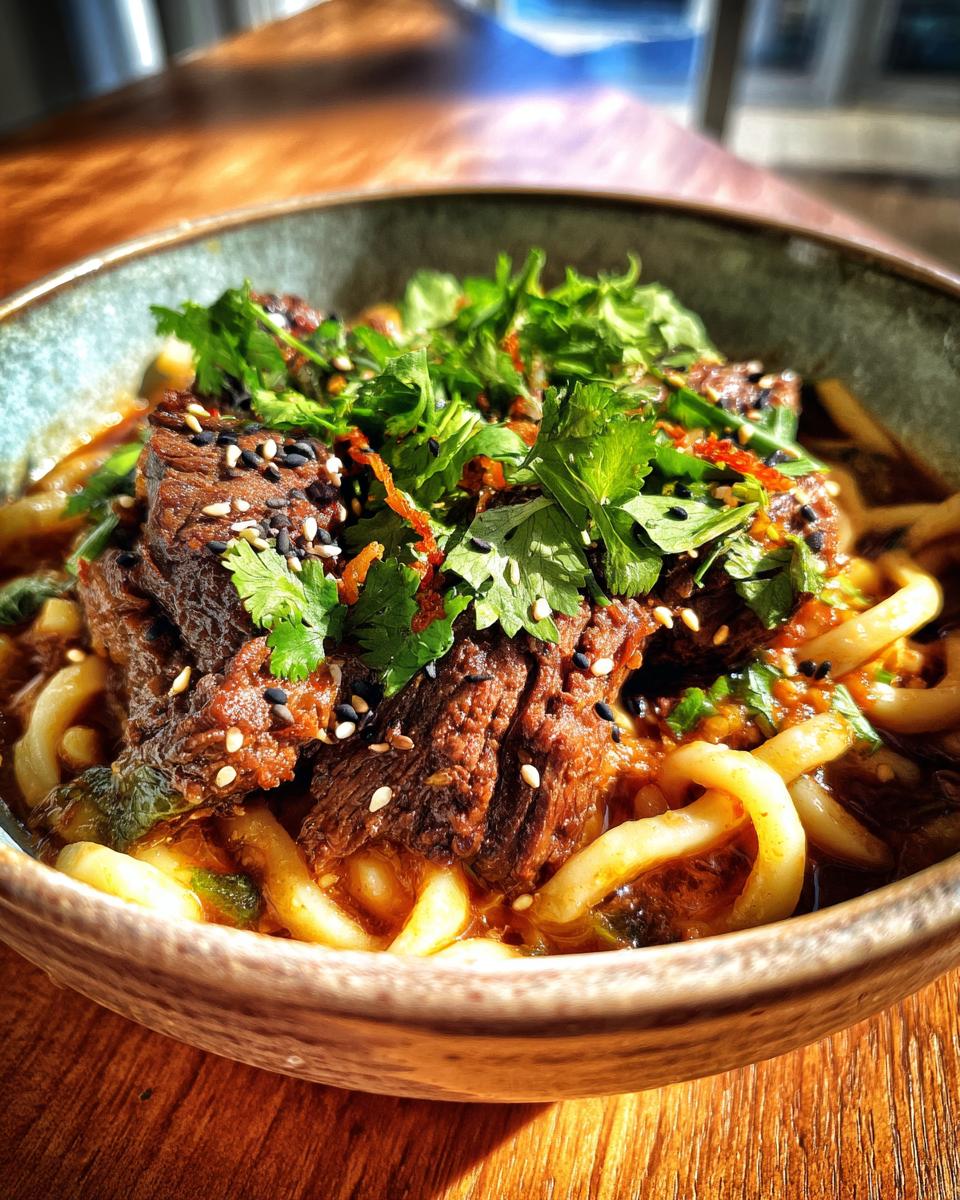
- Spoon the tender beef and sauce generously over the noodles, allowing the sauce to soak into every bite.
- Garnish with freshly chopped coriander and a sprinkle of black sesame seeds for added flavor and crunch.
- Finally, season with kosher salt and black pepper to taste, adding that extra layer of flavor before serving.
Variations
- For a spicy kick, add sliced jalapeños or extra gochujang to the sauce.
- Swap udon noodles for rice noodles or zoodles for a gluten-free option.
- Add seasonal vegetables like bok choy or shiitake mushrooms during the last hour of cooking for added nutrition.
- Try using shredded beef or pork for a different twist on the classic recipe.
Serving and Storage Tips
Serving
To serve, plate the udon noodles first, then generously layer the tender beef and sauce on top. Enjoy with a sprinkle of fresh coriander and black sesame seeds for an added touch. Pair with a side of steamed vegetables or a light salad for a complete meal.
Storage
Store any leftovers in an airtight container in the fridge for up to 3 days. For longer storage, freeze the beef and sauce separately from the noodles for up to a month. Reheat gently on the stove or in the microwave, adding a splash of beef stock to maintain moisture.
Common Mistakes
- Not browning the beef before adding it to the slow cooker can result in less flavor. Always sear the beef for a few minutes to enhance its taste.
- Overcooking the noodles can make them mushy. Follow package instructions closely and rinse them to prevent sticking.
- Skipping the seasoning step at the end can dull the flavors. Always taste and adjust with salt and pepper before serving.
Helpful Notes
- For a richer flavor, consider adding a splash of sesame oil to the sauce.
- If you prefer a thicker sauce, mix 1 tablespoon of cornstarch with water and stir it in during the last 30 minutes of cooking.
- Add a handful of spinach or kale in the last few minutes of cooking for a nutrient boost.
- For a dairy-free option, ensure your beef stock is free from any dairy ingredients.
Frequently Asked Questions
Can the recipe be frozen?
Yes, you can freeze the Slow Cooker Korean Beef Noodles! It's best to freeze the beef and sauce separately from the cooked udon noodles. Store them in airtight containers for up to a month. When you're ready to enjoy, simply thaw in the refrigerator overnight and reheat gently on the stove.
Can ingredients be substituted?
Absolutely! If you can't find ox cheek, you can use oxtail, short ribs, or chuck roast for similar tenderness and flavor. For the gochujang, try using sriracha or another chili paste if you prefer a different spice level. You can also swap udon noodles for rice noodles or even zucchini noodles for a lighter option.
How to store leftovers?
To store leftovers, place them in an airtight container in the fridge. They will stay fresh for up to 3 days. For longer storage, consider freezing the beef and sauce separately from the noodles. This way, you can enjoy the meal again without compromising the texture of the noodles.
Can the recipe be made ahead?
Yes, this recipe is perfect for making ahead! You can prepare the beef and sauce in advance and store it in the fridge until you're ready to cook. Just reheat in the slow cooker or on the stove, then cook the udon noodles fresh just before serving for the best texture and flavor.
Final Thoughts
Slow Cooker Korean Beef Noodles is more than just a dish; it's a heartwarming experience perfect for gathering around the table with loved ones. I encourage you to try this recipe and savor the moments it creates in your home. Whether it's for a cozy weeknight dinner or a special occasion, the tender beef and flavorful sauce will surely warm your heart. Enjoy every bite, and don't forget to share the joy with family and friends!
Slow Cooker Korean Beef Noodles
Equipment
- slow cooker
Ingredients
For the Sauce
- 1 large Onion, finely diced Builds the flavor base.
- 2 tablespoon Gochujang Korean chili paste.
- 2 tablespoon Dark Soy Sauce Delivers deep color and flavor.
- 2 tablespoon Rice Vinegar Adds brightness.
- 1 tablespoon Light Brown Sugar, packed Rounds out flavors.
- 1 tablespoon Garlic-ginger Paste Brings aromatic zing.
- 1 tablespoon Tomato Paste Intensifies savoriness.
- 3.5 oz Low-sodium Beef Stock Infuses flavor.
For the Beef
- 14 oz Ox Cheek The star protein.
For the Noodles
- 4 pouches Ready-to-use Udon Noodles Quick-cooking noodles.
For Garnish
- 1-2 tablespoon Fresh Coriander, chopped Brightens the dish.
- 1 tablespoon Black Sesame Seeds For crunch and appearance.
To Taste
- Kosher Salt & Black Pepper To enhance flavors.
Instructions
- In the slow cooker, combine onion, gochujang, dark soy sauce, rice vinegar, brown sugar, garlic-ginger paste, tomato paste, and beef stock.
- Add ox cheek, cover, and cook on low for 8 hours or until tender.
- Before serving, cook udon noodles according to package instructions.
- Serve beef over noodles and garnish with coriander and sesame seeds.
- Season with salt and pepper before serving.


Leave a Reply